
GTA: Liberty City Stories
Rockstar GamesAdventure
4.04.73K Reviews
- Version
- 2.4.379
- Installs
- 10.00M
- Age Rating
- Mature 17+
Screenshots
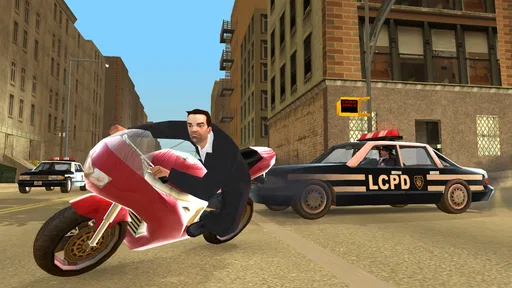
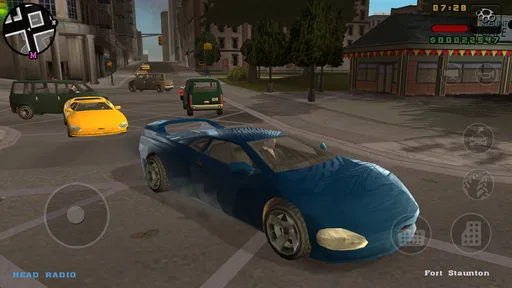
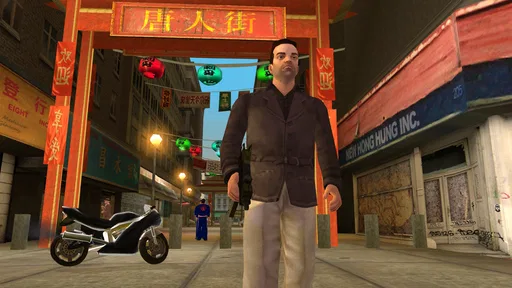
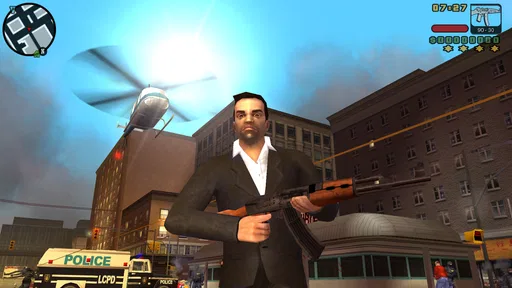
Our Review of GTA: Liberty City Stories
 Analysis by Appyee
Liberty City is the kind of place that makes a short gaming session disappear. I spent time with GTA: Liberty City Stories on mobile and found an adventure game built around quick objectives, criminal errands, driving, shooting, and the constant feeling that one job can open the way to another. It is not a relaxed sightseeing game, and it does not try to soften its mature world. Instead, it brings Rockstar Games’ crime drama format to a touchscreen in a compact form that still feels ambitious.
The game is free to download, carries a Mature 17+ rating, and has attracted more than ten million installs. Its average score sits at 4.0 from roughly 127 thousand ratings, which matches my impression fairly well: there is a lot to like here, but the experience depends heavily on whether you enjoy older open-world design and can adapt to mobile controls. The current version is 2.4.379, and it requires Android 9 or later.
How the first missions establish the rhythm
The opening stretch does a good job of showing what the game expects from me. I am not dropped into a huge world with no direction; early tasks give me immediate reasons to move around Liberty City, learn its streets, and understand how missions are structured. A typical session can involve reaching a location, dealing with a confrontation, escaping trouble, or driving across town under pressure. These goals are simple to understand, but they create a useful rhythm because each one gives the next activity a clear purpose.
That clarity matters on a phone. I can play for a short period, complete a job, and stop without feeling that I have abandoned a complicated strategy or missed a long chain of preparation. At the same time, the city makes even a basic assignment feel less isolated. Traffic, rival characters, police attention, and awkward routes can turn a straightforward trip into an unscripted problem.
My most useful early tip is to treat driving as part of the mission rather than as dead time. Learning which roads are comfortable, where turns are easy to make, and how much space I need to stop reduces frustration later. Touch controls make sudden corrections less precise than a physical controller, so arriving with a little patience is often better than rushing and damaging the vehicle before the real objective begins.
The early goals also reveal the game’s tone. This is an adult crime story, not a family-friendly adventure, and the missions can involve violence, criminal activity, and harsh language. The Mature 17+ classification is therefore important for parents and younger players. Anyone expecting a cheerful open-world playground should look elsewhere, because the atmosphere is deliberately rough and confrontational.
What progress feels like during ordinary play
The strongest progress signal is not a collection of flashy menus; it is the changing shape of the city and the growing confidence I gain while moving through it. Completing missions gives the campaign forward motion, while familiarity with Liberty City makes later travel feel less demanding. I begin by thinking about where I am going. After more time, I think about how quickly I can get there and what might go wrong on the way.
That kind of progress is easy to overlook because it is partly personal. The game does not need to announce every improvement for me to notice that I am handling situations better. I become more comfortable choosing routes, positioning a vehicle, escaping a dangerous encounter, and restarting a failed attempt without repeating every earlier mistake. For me, that was more satisfying than simply collecting rewards.
There is also a practical advantage to the mission-based structure: it gives the campaign natural stopping points. If I have only a few minutes, I can aim for one clear objective. If I have longer, I can continue into another mission or spend time moving through the city. This makes the game suitable for commuting, waiting rooms, or evenings when I want something more substantial than a quick puzzle but do not want to begin a long console session.
One trade-off is that the game’s age shows in the way progress is communicated. Players accustomed to modern open-world games may expect constant guidance, polished tutorials, and highly visible rewards. Liberty City Stories is more comfortable letting the player learn through repetition. That can feel rewarding once the systems click, but it can also make the first hours less welcoming than newer alternatives.
Challenge, failure, and the mobile control problem
The difficulty curve is uneven in a way I associate with classic open-world action games. Some objectives are manageable once I understand the route and timing, while others become difficult because several demands arrive together: driving accurately, watching the surroundings, responding quickly, and keeping control of the character on a small screen. The challenge is not always a pure test of combat or driving skill. Sometimes it is a test of whether I can keep the controls under control while the situation becomes chaotic.
Touchscreen play is the biggest factor here. Virtual buttons can work well when I am moving at a steady pace, but quick steering, aiming, and camera adjustments require more attention than they would with a gamepad. I found that a larger phone or tablet can make the experience more comfortable, especially during missions that combine driving with sudden action. A compact screen is still usable, but my thumbs can cover important visual information and make mistakes more likely.
I recommend changing my approach after a failed attempt instead of immediately repeating it. If a mission goes wrong during travel, I slow down and choose a safer route. If the problem is combat, I focus on positioning before attacking. If the controls feel crowded, I take a moment to adjust my grip rather than blaming the mission itself. These small habits make the difficulty feel more deliberate and less random.
The game is also better for players who accept failure as part of the loop. It does not always provide the gentle, constantly forgiving structure found in current mobile adventures. A failed objective can break the flow, particularly when I have spent time reaching the action. That friction is part of its old-school identity, but it is a genuine weakness for anyone wanting a smooth, low-stress experience.
Unlocks, momentum, and the reasons to keep playing
The main retention pressure comes from wanting to see what happens next and from the simple satisfaction of clearing another mission. The city acts as a backdrop for that momentum, while the campaign gives me a reason to keep returning. I did not need a daily reward routine to understand the appeal; the next objective was usually enough when I was already invested in the story and the world.
This is an important distinction from many mobile games. Liberty City Stories does not feel designed around tiny interruptions or endless waiting. Its appeal is closer to a traditional adventure game adapted for a phone: start a mission, deal with the complications, and move forward. That makes it a strong choice for someone who wants a substantial single-player experience instead of a competitive service that demands regular check-ins.
However, the same structure can create pressure of a different kind. Once I am close to completing a difficult sequence, I may keep playing longer than planned because I want to overcome the obstacle. The game’s tension comes from unfinished goals rather than from a timer or social ranking. I found that compelling, but players who prefer a clearly bounded ten-minute experience may find the missions harder to leave halfway through.
The in-app purchase price is $6.99 per item, so I would check the purchase screen carefully before spending money. The game is listed as free, but that does not mean every part of the mobile experience should be approached casually from a budgeting perspective. For a younger player, the age rating and the possibility of paid items are both reasons for an adult to review the device’s purchase settings first.
Another useful consideration is storage and device comfort. I would install it on a phone with enough free space and test performance before planning a long trip around it. Even when a game runs correctly, extended driving and action sessions can make a phone warm and drain the battery faster than a simple mobile title. That is not a reason to avoid it, but it is part of deciding whether it fits my everyday routine.
How it compares with newer mobile adventures
Compared with modern mobile adventure games, this one feels more focused on direct control and mission completion than on elaborate menus, constant events, or social competition. That is its main strength. I can enter the world, take on a job, and judge my progress by what I accomplish rather than by checking a long list of timed activities.
Newer open-world games may offer smoother touch interfaces, more obvious tutorials, or presentation designed specifically for current phones. They can be easier to pick up, especially for players unfamiliar with Rockstar’s older design style. On the other hand, they may also surround the core adventure with more notifications, progression layers, and monetization prompts. Liberty City Stories feels comparatively straightforward, even when its controls and mission difficulty are less forgiving.
A dedicated console or PC version is the better choice if precise aiming, comfortable camera control, and a large display matter more to me than portability. A newer mobile crime game may be preferable if I want short, highly guided tasks or a more contemporary interface. I would choose this title when I value a self-contained-feeling campaign, a recognizable open city, and the ability to play a substantial Rockstar adventure away from a television.
It is also worth separating this game from casual driving apps. The vehicles are not the whole experience; driving supports missions, escapes, exploration, and problem-solving. Someone looking only for a relaxed driving sandbox may find the criminal objectives too demanding, while someone seeking a story-led adventure will probably appreciate that the city is constantly tied back to action.
Who will enjoy the campaign, and who should skip it
I would recommend it to players who enjoy classic open-world crime adventures, can tolerate some control friction, and like learning a city through repeated travel. It is especially suitable for someone who wants a single-player game that can be played in short sessions but still has enough structure to support longer evenings. The free entry point makes it easy to test whether the tone and touchscreen handling suit me before I commit to more time.
I would be more cautious recommending it to players who dislike mature themes, repeated attempts, or missions where a small driving error can ruin an otherwise successful run. It is also not my first choice for a child, for someone seeking a calm game, or for a player who needs consistently precise controls without a controller. The Mature 17+ rating should be treated as a real suitability warning, not a decorative label.
For everyday use, I can imagine playing it after work by setting one modest goal: finish a mission, explore a nearby area, or practice a route that previously caused trouble. That approach keeps the game enjoyable instead of turning every session into a race through the campaign. On a long journey, I would use a controller if available, lower distractions around me, and avoid starting a mission when I know I will need to stop immediately.
One less obvious strength is how the game rewards attention to context. A mission is not just an isolated marker on a map; the route, traffic, vehicle choice, and surrounding trouble can all affect the outcome. I get better results when I prepare mentally for the whole trip rather than focusing only on the final confrontation. That makes the city feel like an active obstacle instead of a decorative background.
My verdict on the progression and pacing
After playing through its core rhythm, I think the progression works because it combines clear immediate goals with gradual mastery. The campaign keeps me moving without burying the experience under layers of mobile-only systems. Unlocks and forward momentum matter, but the most convincing sense of advancement comes from understanding Liberty City and becoming more capable under pressure.
The pacing is not flawless. Some missions can feel abrupt, the touch controls can magnify ordinary mistakes, and the older design may seem demanding beside newer mobile adventures. The game also asks me to accept that failure and repetition are normal rather than exceptional. Those limitations are significant enough that I would not recommend it blindly to every phone gamer.
Still, Rockstar Games has created a mobile adventure with a clear identity. The free price makes trying it straightforward, while the 4.0 average from a large player audience suggests a broadly positive reception without implying universal perfection. With more than ten million installs, it has clearly found a substantial mobile audience, and I can understand why: the combination of missions, driving, exploration, and criminal drama remains effective when the controls cooperate.
My final recommendation is simple: try it if you want a serious, mission-driven open-world adventure and are willing to spend time adapting to touchscreen play. Skip it if you need gentle pacing, family-friendly content, or the precision of a console controller. For the right player, this is not merely a quick mobile port to fill spare minutes; it is a demanding portable version of a full-sized adventure whose goals, setbacks, and city exploration can keep me engaged well beyond the first session.
Privacy and Permissions
See what permissions an app requests and how it handles your data.
- Photos/Media/Files
- read the contents of your USB storage, modify or delete the contents of your USB storage
- Storage
- read the contents of your USB storage, modify or delete the contents of your USB storage
- Wi-Fi connection information
- view Wi-Fi connections
- Other
- view network connections, measure app storage space, full network access, run at startup, control vibration, prevent device from sleeping, Google Play license check
Verdict
Strengths of GTA: Liberty City Stories
- Full 3D open-world gameplay with plenty of missions and side activities.
- Strong crime-story atmosphere with memorable characters and radio stations.
- Touch controls support customization for a more comfortable layout.
- Controller compatibility makes driving and shooting easier on mobile.
- Works offline, so the main campaign can be played without an internet connection.
Limitations of GTA: Liberty City Stories
- The dated visuals and animations may feel rough on modern devices.
- Some missions rely on imprecise touch aiming and can become frustrating.
- The open world is smaller and less detailed than newer GTA titles.
- No online multiplayer or modern social features are included.
- The game requires substantial storage space for a mobile title.
Other Releases by Rockstar Games
View All
Grand Theft Auto: San Andreas
Action4.5

GTA: Vice City - Definitive
Action3.8

Bully: Anniversary Edition
Action4.0

Grand Theft Auto: Vice City
Arcade3.3
Similar Picks in This Category
View All
Roblox
Roblox Corporation4.2

Pokémon GO
Niantic, Inc.3.5

Ninja warrior: legend of adven
TOH Games4.6

Ninja Arashi
Black Panther4.6

Eyes - The Horror Game
Fearless Games sp. j.4.5

Critical Action:Gun Strike Ops
FPS Shooter & Action Game4.3
Frequently Asked Questions
What is GTA: Liberty City Stories about?
GTA: Liberty City Stories is an open-world action game set in Liberty City, the fictional metropolis also featured in Grand Theft Auto III. You play as Toni Cipriani, a member of the Leone crime family, as he completes missions involving organized crime, rival gangs, corruption, and power struggles. The game combines a story-driven campaign with driving, shooting, exploration, and side activities.
Can GTA: Liberty City Stories be played offline?
Yes, the main single-player campaign can generally be played offline after the game has been installed on a compatible device. An internet connection may still be required for downloading the app, verifying the purchase, receiving updates, or restoring access through the relevant app store. Offline play is especially useful when traveling, although cloud-related features may depend on your platform and account.
What devices are compatible with GTA: Liberty City Stories?
Compatibility depends on the version of Android or iOS installed, the device’s processor, available storage, and the publisher’s current support list. Newer phones and tablets usually provide the smoothest experience, while older or low-powered devices may suffer from reduced performance or may not be supported. Check the official Google Play or App Store listing before downloading.
Does GTA: Liberty City Stories include in-app purchases or advertisements?
The mobile version is normally presented as a premium game rather than a free-to-play title, so players typically purchase it upfront instead of dealing with energy systems, constant advertisements, or mandatory microtransactions. Store policies and editions can change, however, so review the current listing for the exact price, purchase conditions, and any platform-specific requirements before completing the download.
Is GTA: Liberty City Stories suitable for children?
GTA: Liberty City Stories is intended for mature audiences because it contains strong violence, criminal themes, weapons, profanity, sexual references, and other adult content. The game’s story focuses on organized crime and includes missions that may be inappropriate for younger players. Parents should check the age rating displayed in their region and consider using device-level parental controls before installation.
Play our best games!


